Hinduism and Judaism Exhibition Promotes Understanding and Community Cohesion in Cheshire East
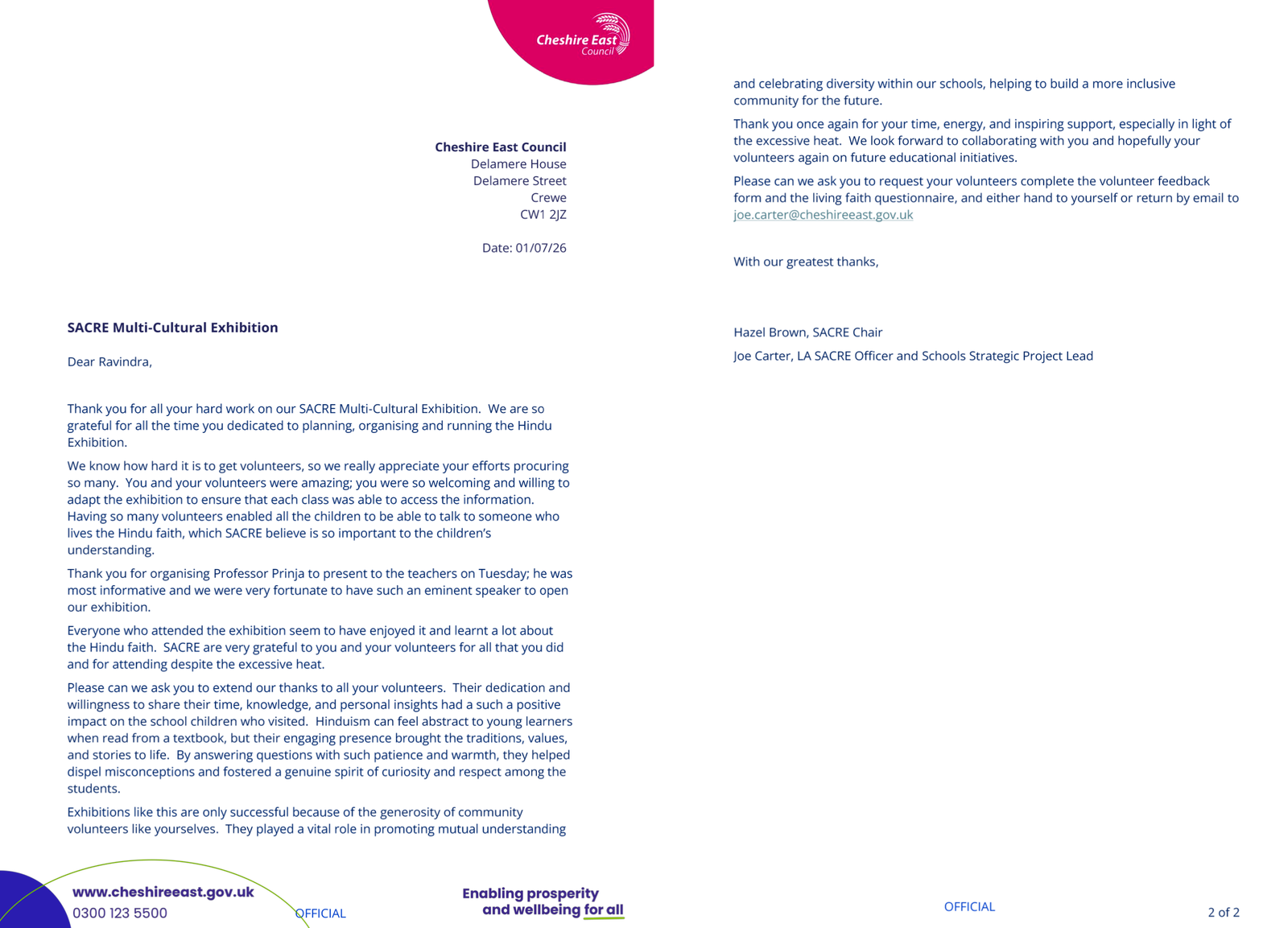
In June 2026, Cheshire East Council and the Cheshire East Standing Advisory Council on Religious Education (SACRE) organised an educational exhibition exploring Hinduism and Judaism, bringing together teachers, pupils, community volunteers, and representatives from both faith communities.
The three-day programme was supported by local volunteers and members of the Crewe Branch of Hindu Swayamsevak Sangh (UK), with guidance from InsightUK and the Hindu Education Board. The initiative provided an opportunity for schools and educators to develop a deeper understanding of two rich and diverse religious traditions and their contributions to society.
Professional Development for Teachers
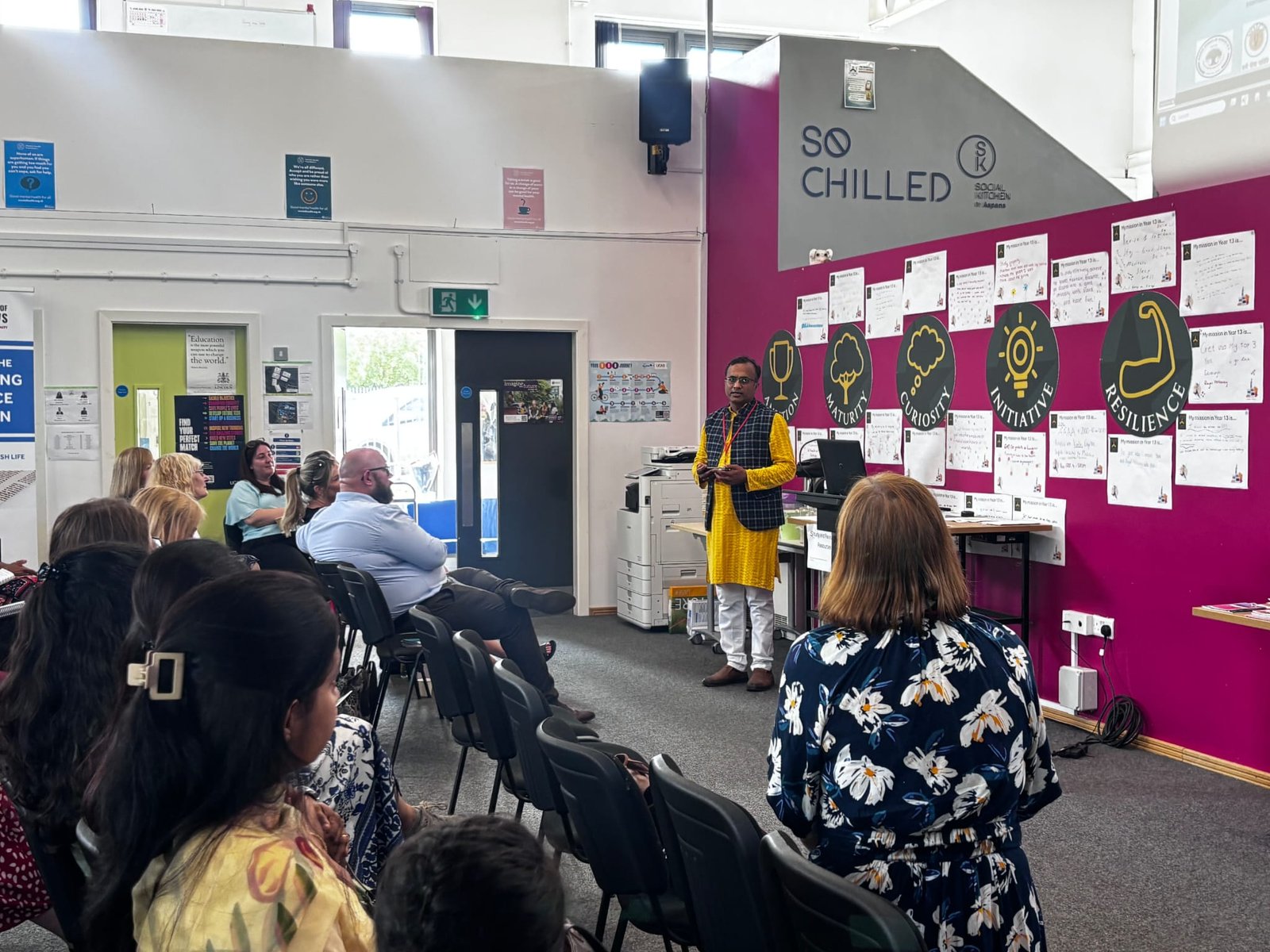
The programme began on 23 June 2026 with an evening professional development session for Religious Education teachers.
The session included a presentation on Hinduism by Professor Nawal Prinja and a presentation on Judaism by Ms Anna Silver. The sessions helped educators explore the beliefs, traditions, history, and lived experiences associated with the two faiths, supporting them in delivering balanced and informed religious education in schools.
Introducing Hinduism and Judaism to Young Learners
On 24 and 25 June, the exhibition welcomed primary school pupils and teachers from around 10 local schools.
Each school participated in an interactive one-hour session where children explored Hinduism and Judaism through exhibitions, artefacts, conversations, and question-and-answer sessions with members of the respective communities. The sessions concluded with a fun quiz, allowing pupils to reflect on what they had learned.
The interactive approach gave children an opportunity to go beyond textbooks and encounter religious traditions through direct engagement with people who practise them.
Exploring Hindu Heritage Through the Darshana Exhibition
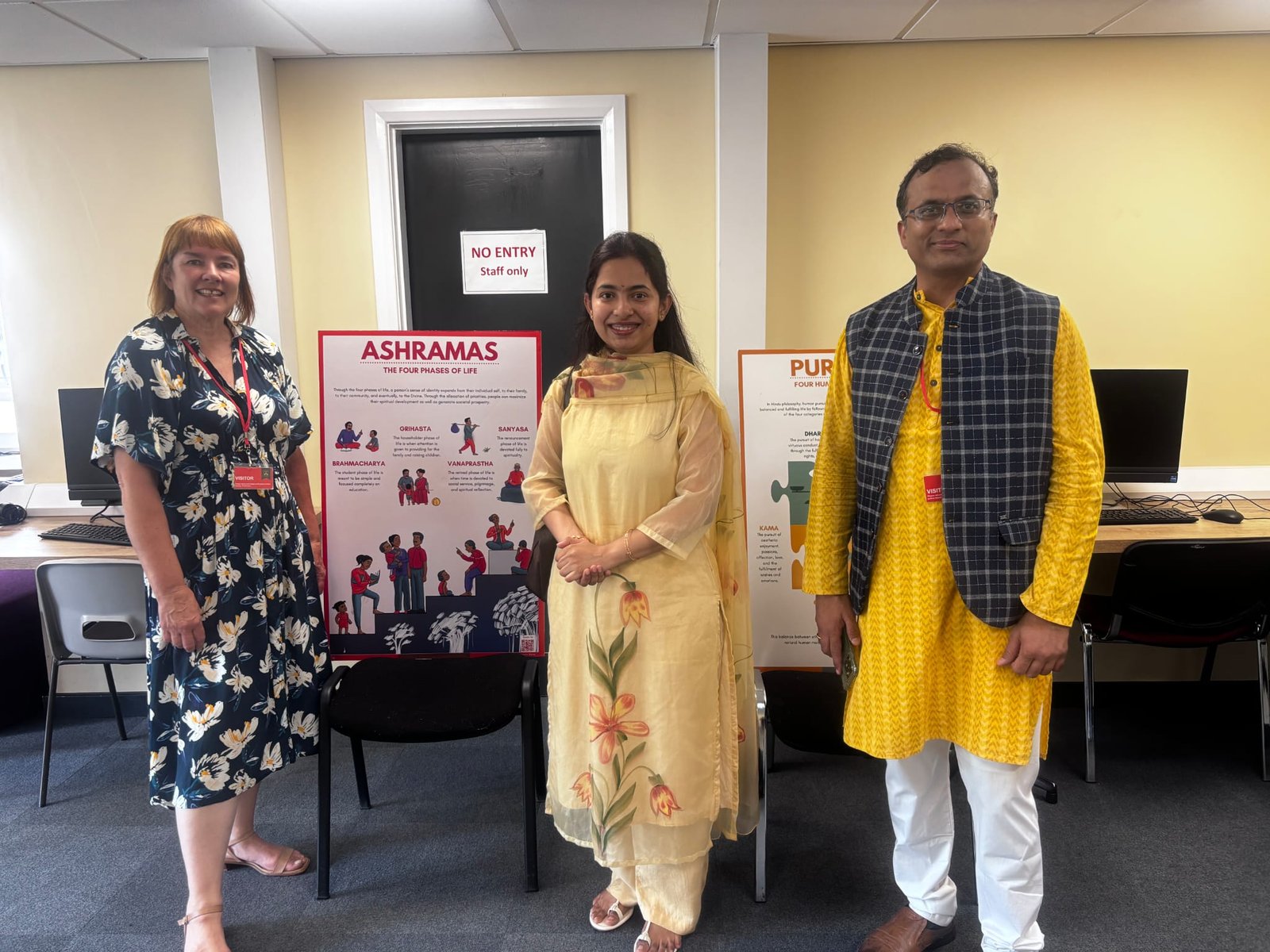
The Hindu section featured the Darshana Exhibition, which introduced children to a broad range of aspects of Hindu civilisation and culture.
The exhibition explored Hindu beliefs and values alongside India’s rich contributions to history, culture, architecture, mathematics, and intellectual thought. It also demonstrated the diversity within Hindu traditions and encouraged children to understand Hinduism not simply as a set of religious practices, but as a broad and evolving cultural and philosophical tradition.
The word Darshana can be understood as “a way of seeing” or “a perspective”. In the Hindu philosophical tradition, darshana also refers to different schools of thought and ways of understanding reality.
For young people, the exhibition provided an accessible introduction to this diversity and allowed them to ask questions directly to practising Hindus.
Learning Through Dialogue
A particularly valuable aspect of the initiative was the opportunity for children and teachers to engage directly with members of the Hindu and Jewish communities.
Such interaction can help challenge assumptions and encourage a more nuanced understanding of faith and culture. It also demonstrates the importance of creating opportunities where different communities can learn about one another in an open, respectful environment.
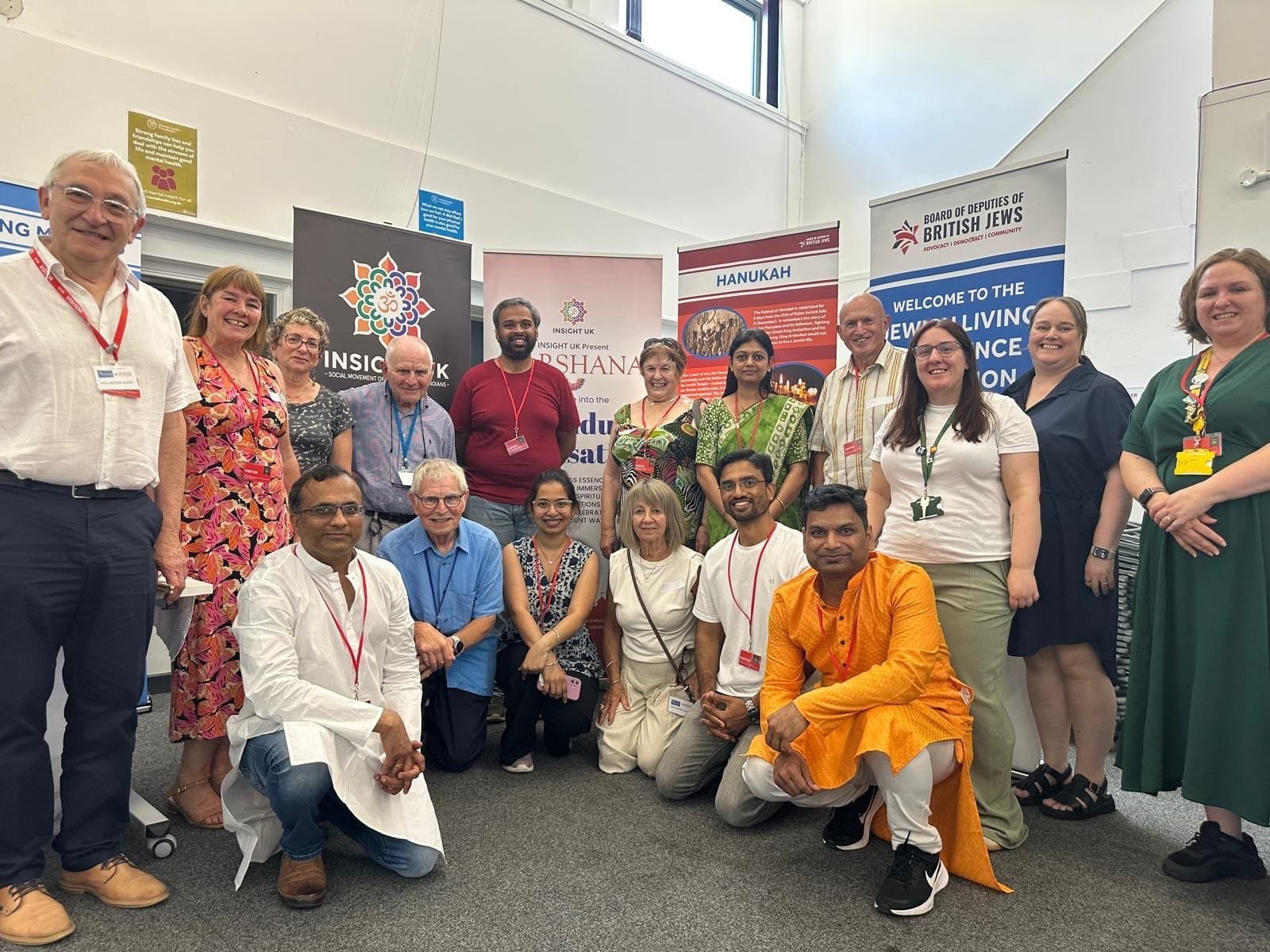
Working alongside members of the local Jewish community was especially meaningful, highlighting how education, dialogue, mutual respect, and shared community engagement can contribute to stronger and more cohesive communities.
Volunteering as a Form of Service
The programme was made possible by the many volunteers and members of HSS (UK) who generously contributed their time, knowledge, and enthusiasm.
Hindu Swayamsevak Sangh (UK), commonly known as HSS (UK), is a voluntary cultural and community organisation active across the United Kingdom. Its activities encourage personal development, cultural understanding, family participation, community service, and active citizenship.
One of the important principles that inspires community participation within Hindu traditions is Seva, meaning selfless service—offering one’s time, skills, or effort for the benefit of others without expecting anything in return.
Volunteering in schools, supporting educational initiatives, and contributing to local community programmes are practical examples of this principle in action.
A heartfelt thank you goes to all the volunteers, educators, community representatives, and partner organisations whose efforts helped make the exhibition a success.
The initiative is a strong example of how faith communities, schools, local authorities, and volunteers can work together to promote religious literacy, mutual understanding, and community cohesion.
We hope this experience encourages more people to share their time and expertise through schools, councils, and community initiatives. By learning from one another and contributing positively to society, we can help build a more informed, respectful, and inclusive community for everyone.