From Anubhava Mantapa to Westminster: Young People Explore Democracy and Heritage
A Visit to the Houses of Parliament
Young people from the Kesari Branch of Hindu Swayamsevak Sangh (UK) had the opportunity to visit the Palace of Westminster and the UK Parliament in London, combining an exploration of British democracy with an introduction to an important chapter of India’s own intellectual and social heritage.
For the Kishore and Kishori participants—the teenage members of HSS (UK)—the visit provided a memorable opportunity to learn first-hand about the history, traditions, and functioning of the UK’s parliamentary system.
Hindu Swayamsevak Sangh (UK), commonly known as HSS (UK), is a voluntary cultural and community organisation that promotes personal development, family values, community service, and active citizenship across the United Kingdom. Its activities encourage young people to develop confidence, leadership, teamwork, and an understanding of their cultural heritage while actively engaging with the wider society in which they live.
Beginning with India’s Own Democratic Heritage
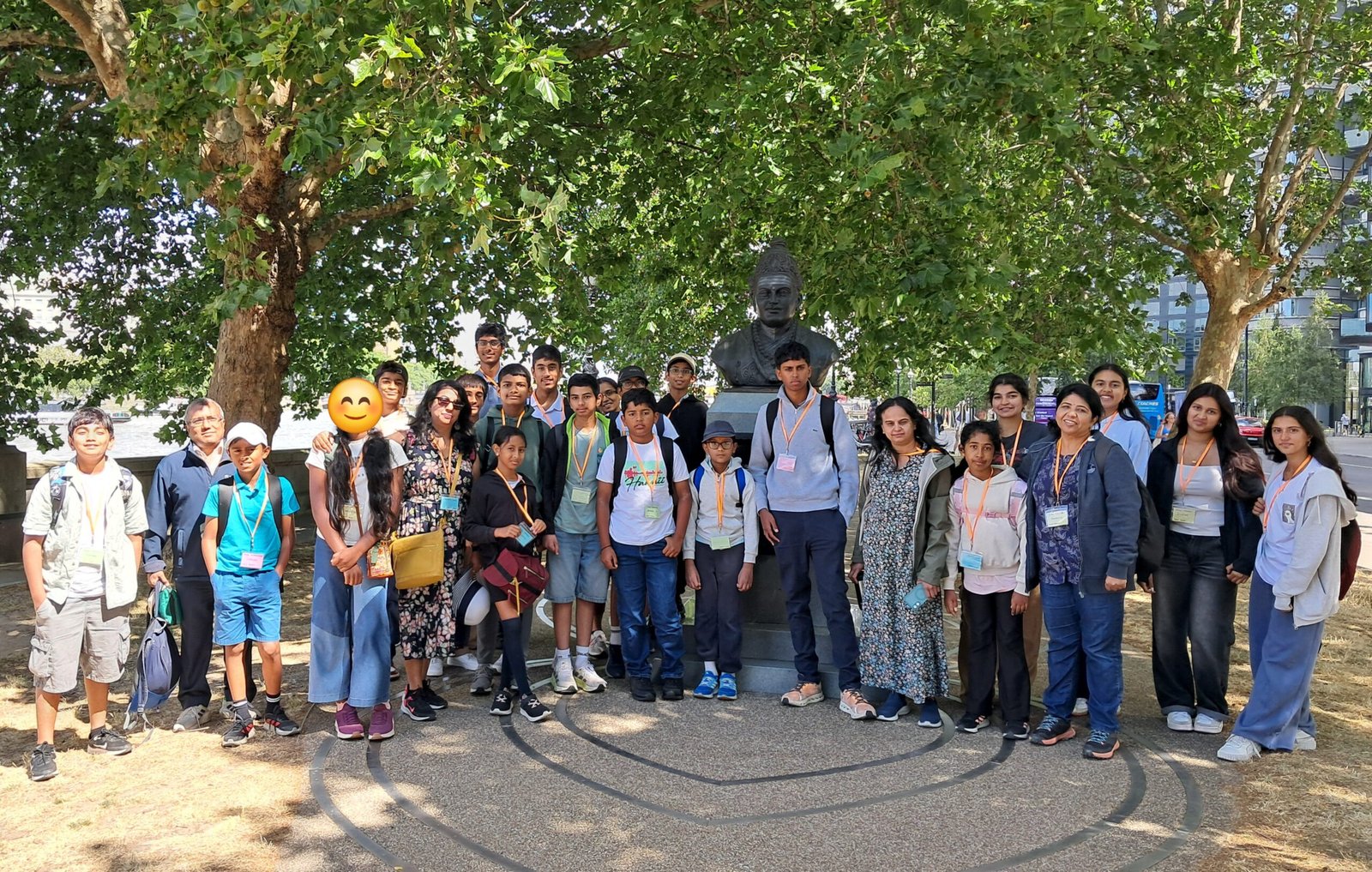
The day began at the Basaveshwara statue at Albert Embankment, where the group learned about Basaveshwara, the 12th-century Indian philosopher, poet, social reformer, and spiritual thinker.
Basaveshwara is associated with the Anubhava Mantapa, a historic forum for open discussion and exchange of ideas. The name can be translated as “Hall of Experience” or “forum of shared experience”. It brought together people from different backgrounds to discuss spiritual, social, and ethical questions.
The Anubhava Mantapa is often described as an early example of a forum for democratic and intellectual discussion. Its emphasis on dialogue, equality, questioning, and sharing experiences provided an interesting connection for the young participants before they went on to explore the modern parliamentary institutions of the United Kingdom.
Beginning the visit with this aspect of Indian history helped demonstrate that ideas surrounding public dialogue, social responsibility, and collective decision-making have also been part of India’s long intellectual tradition.
Walking Through London’s History
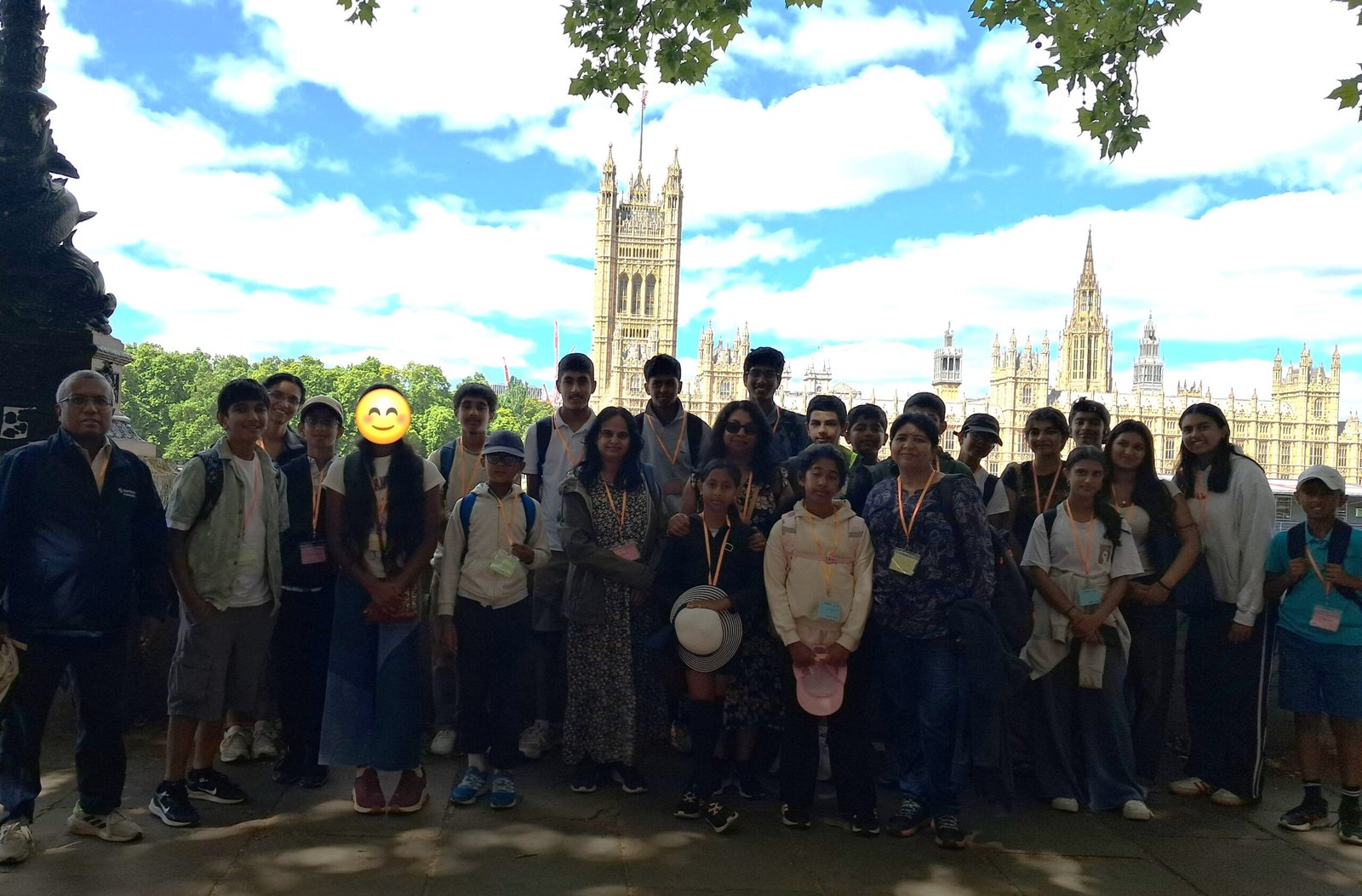
From Albert Embankment, the group walked along the River Thames towards Westminster, taking in some of London’s most recognisable landmarks.
The group stopped at Victoria Gardens for lunch before their scheduled entry into Parliament. The break also gave the young people time to relax, play, socialise, and enjoy one another’s company.
The anticipation grew as the group approached the Palace of Westminster, one of the world’s most recognisable centres of parliamentary democracy.
Inside the Houses of Parliament
The Parliament visit provided an opportunity to see where important decisions affecting life across the United Kingdom are debated and scrutinised.
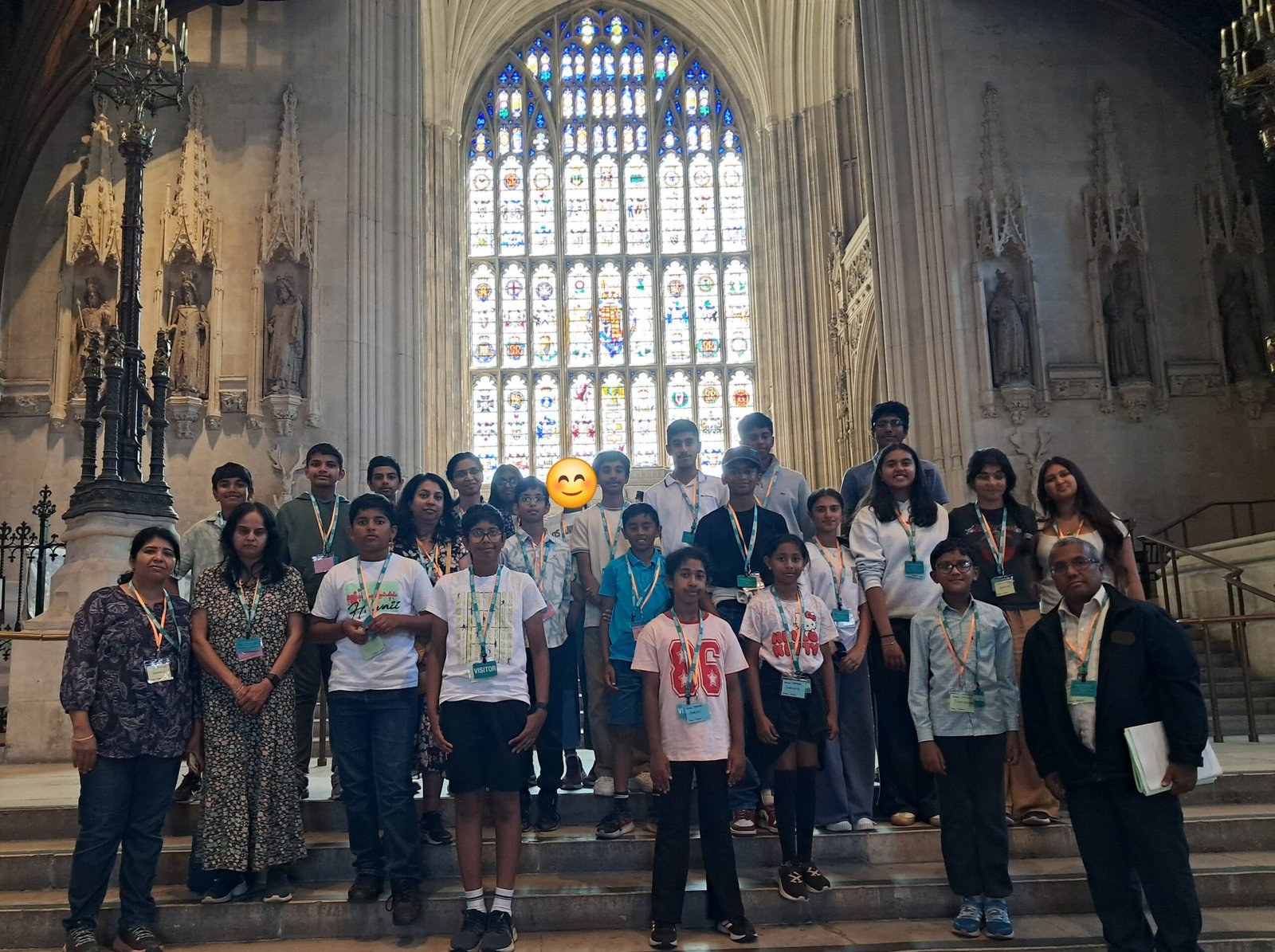
The young participants explored both the House of Commons and the House of Lords, learning about their different roles and how legislation progresses through Parliament.
The visit included explanations from the parliamentary guides about the development of Britain’s political system, the relationship between Parliament and the monarchy, and the processes through which laws are debated and approved.
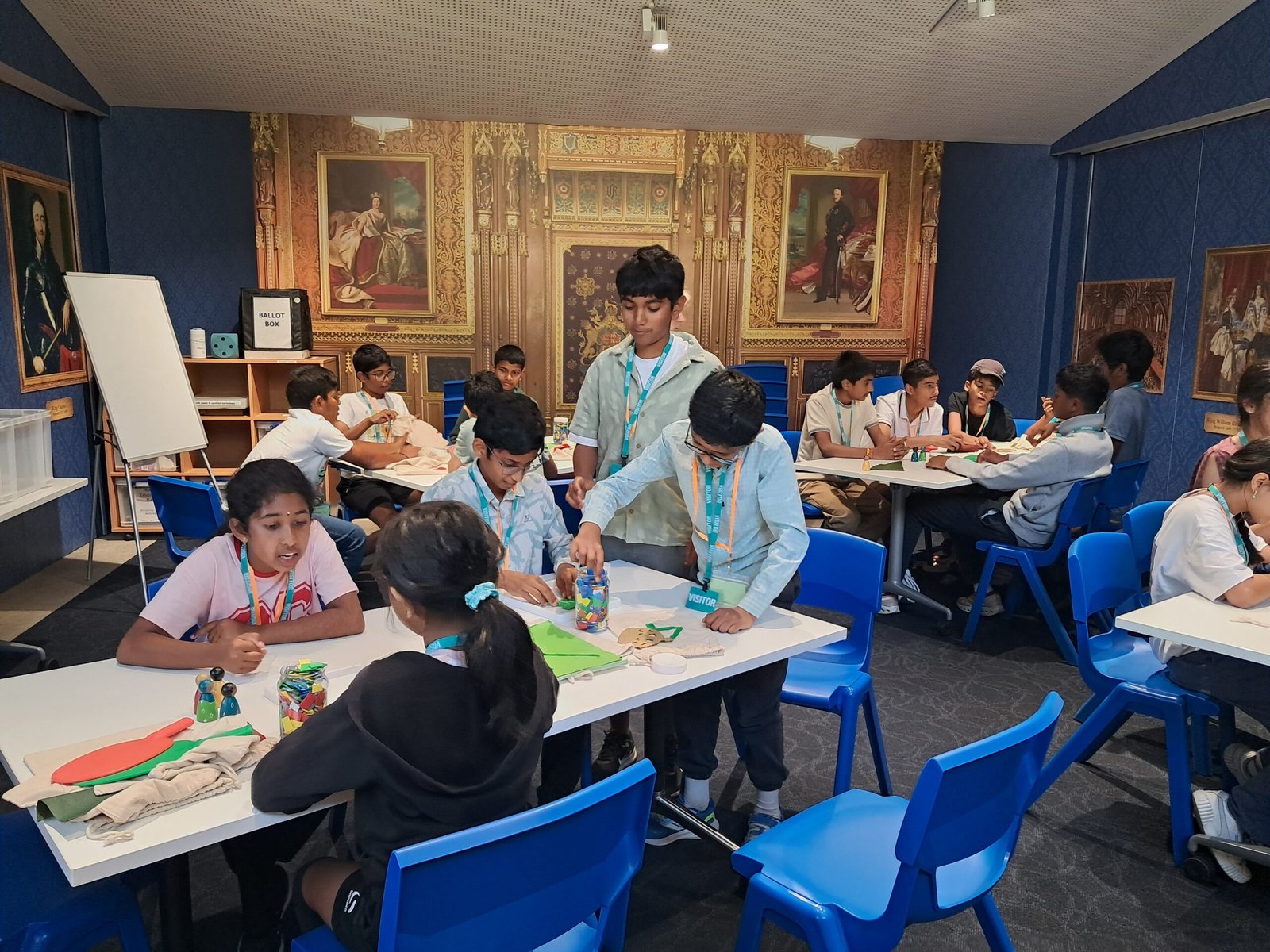
The interactive workshop that followed allowed the young people to put some of their learning into practice. They explored how a proposed law can develop through the parliamentary process and considered different ways members of the public can seek to influence political decision-making, including lobbying.
Learning Through the Eyes of the Young Participants
The visit became particularly meaningful through the reflections shared by the young people themselves.
Manas Atreya reflected on the different roles of the two Houses:
“We discussed how the Commons holds ultimate power and autonomy to make decisions, while the Lords, made up of experts selected by the Prime Minister, play a vital role in shaping laws. We also learned how Simon de Montfort’s reforms reduced the power of the monarchy. Finally, we took part in an activity where we tried creating our own law and learned different ways the public can advocate for change, such as lobbying.”
Arnav Sawant found that seeing Westminster in person made politics more tangible:
“When I walked into Westminster Hall, I learned how important Parliament is in British history. The visit helped me to understand how the government makes decisions, why debate and teamwork are so important, and made politics feel much more real and easier to understand.”
Thrivikram Danda was fascinated by the traditions surrounding the monarchy and Parliament:
“During the visit, we learned that the King is not allowed in the House of Commons, so he sends Black Rod, a messenger, to announce his arrival and invite MPs to the House of Lords.”
Samitha Iyengar particularly enjoyed the interactive nature of the experience:
“Our tour guides taught us in depth about Parliament and how it works. The workshop was very interactive, where we solidified the knowledge we previously gained from the tour. Overall, it was a fantastic and engaging trip.”
Atharv Iyengar remembered the process through which legislation is considered by both Houses:
“We learned that bills are considered back and forth between the two Houses before they are approved.”
Experiencing Westminster’s Architecture and Traditions
For several participants, the visit was as much about experiencing the historic building as it was about learning politics.
Smriti Phani recalled:
“The coach was amazing and it was VIP! Once we got off the coach, the view was picturesque and we heard Big Ben ring at 12pm. The staff were very nice and answered our many questions. At the workshop, we made a mosaic.”
Sathvik Vutla described entering Parliament through the traditional Royal Route:
“We walked through the Royal Route into Parliament and saw the Robing Room where the King prepares for his speech.”
Atharv Subhas was particularly impressed by the building itself:
“We got to explore the historical architecture and glorious paintings that capture the battles of Britain and royal ceremonies. The majestic Houses of Parliament were mesmerising. I liked how the speakers were embedded into the seats.”
Shreshta Attinamane summed up the experience:
“The trip was absolutely fantastic from start to finish. It was both outstanding and educational. I learnt a lot about the House of Commons and the House of Lords and made a mosaic of Bourton-on-the-Water.”
Understanding Democracy Through Experience
Satvik Jaiswal highlighted the opportunity to see a significant part of Britain’s political system first-hand:
“We explored London’s greatest landmarks, which included the House of Commons, a place where even the monarch cannot enter. The guides explained everything in an engaging and humorous manner. Overall, the day was very well planned and interactive.”
For Dyuthi Kirani, the combination of the tour and activities made the experience particularly enjoyable:
“The trip was educational, fun, interactive and very enjoyable. The workshop at the end was also interactive, where we were given activities to complete.”
Sathvik Geda found the historical details especially interesting:
“The trip was amazing; I really enjoyed the coach ride. The tour of Parliament was the best, as I learnt a lot about British politics and also learnt that King Henry VIII used to play tennis in Westminster Hall.”
Other participants remembered some of the distinctive visual features of the parliamentary chambers.
Srihan Geda observed:
“The House of Commons and House of Lords have their own colour coding—red for the Lords and green for the Commons.”
Aadvika Adarsh reflected on the broader historical significance:
“The tour around Parliament taught me so much about British history and also politics. It was interesting to see where all the British laws are made.”
And for Aarush Adarsh, one of the most striking historical details was learning about the turbulent relationship between the monarchy and Parliament:
“I really enjoyed the Parliament visit. I was astonished when I heard that King Charles I was executed after the events involving Parliament.”
Connecting Heritage with Active Citizenship
The visit provided more than a tour of a famous London landmark. It encouraged young people to think about democracy, leadership, debate, responsibility, history, and civic participation.
Starting the day by learning about Basaveshwara and the Anubhava Mantapa also created an interesting cultural connection between India’s historical tradition of dialogue and the UK’s parliamentary institutions.
For young people growing up in Britain with Indian and Hindu heritage, experiences such as this can help them appreciate both aspects of their identity: understanding the rich intellectual and cultural traditions from which their heritage comes, while also becoming informed and active members of the society in which they live.
The visit demonstrated that cultural education and civic education can complement one another. By exploring both India’s historical heritage and Britain’s democratic institutions, the young participants were encouraged to ask questions, listen to different perspectives, understand systems of governance, and appreciate the responsibilities that come with living in a diverse society.
For the young people of the Kesari Branch of Hindu Swayamsevak Sangh (UK), it was a day of history, culture, learning, friendship, and active citizenship—with memories and lessons that will extend well beyond the walls of Westminster.